This glossary explains biological, botanical, zoological and mycological terms, as well as terms used in cecidology. It is intended to make the numerous technical terms used in the photo gallery and on the information pages of this website easier to understand.
All | A | B | C | D | E | F | G | H | I | J | K | L | M | N | O | P | Q | R | S | T | U | V | W | X | Y | Z |

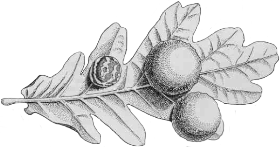
Oak gall
An oak gall occurring on the underside of oak leaves, induced by gall wasps of the genus Cynips.
Oligolecty
Oligolecty describes a foraging and dietary strategy in bees. A bee species is termed oligolectic when females collect pollen exclusively from one plant species or closely related species and use it to provision their nests with larval food.
Ontogeny
Ontogeny is the development of an individual organism. The temporal course of individual development is also called developmental history. It describes the successive stages from germ-cell development through the fully developed adult stage and also includes age-related degeneration.
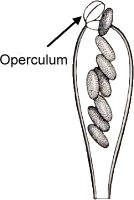
Operculum
A lid-like closure at the apex of the asci. It is, for example, characteristic of the Pezizales.
Organoid
organoid means organ-like. In the context of plant galls, it refers to changes in individual plant organs, such as changes in form, anomalies of leaf arrangement or branching, and the formation of new organs.
TOP